Be yourself; Everyone else is already taken.
— Oscar Wilde.
This is the first post on my new blog. I’m just getting this new blog going, so stay tuned for more. Subscribe below to get notified when I post new updates.
Be yourself; Everyone else is already taken.
— Oscar Wilde.
This is the first post on my new blog. I’m just getting this new blog going, so stay tuned for more. Subscribe below to get notified when I post new updates.

Protein is one of the macronutrients responsible for building muscle mass. There are many ways to consume protein from animal products to plant-based products, but this article is going to discuss the protein shake.
Protein shakes are a mix of a liquid, usually either water milk (depending on if you need extra calories or not) and mixable protein powder.
The use of protein shakes is to boost the daily consumption of protein. It is most commonly used for those trying to build muscle; however, it can also be used to lose extra body weight. An example of this is when a professional bodybuilder or wrestler is trying to cut weight. The first thing they cut from their diet is carbs because by cutting carbs, the diet forces the body to burn fat for energy rather than burning the sugars or glucose consumed from carbs.
There are many types of protein shakes on the market. Protein shakes come available premade, or they come in the powder, ready to be mixed.
Protein shakes can be found that are vegan friendly to regular store-bought protein powder from Walmart. There’s a vast array of different proteins that can be consumed.
Protein shakes are great for building muscle mass.
The use of protein adds more protein macros to your daily diet. If you are trying to put on weight, the protein shakes can allow you to consume more calories to pair with eating. Protein sparks muscle growth.
Protein shakes are great for losing weight and preventing it too.
Extra protein in your diet will take over the typical carb overload. Protein shakes will decrease appetite and can be used for meal replacements with intermediate fasting. Protein shakes are also shown to boost metabolism.
The protein shake you choose should correspond to your goals. If you are looking to put on weight and muscle, a mass gainer protein shake is excellent. However, an important thing to keep in mind is that protein shakes should not replace meals. Eating and consuming healthy meals is the best way to get in shape and stay in shape. Protein shakes are used in support.
On the other hand, if you are trying to lose weight, protein shakes are great. Mass gainer would be the right choice, but whey or soy protein would benefit you.
Here are some excellent links to learn more.
https://www.healthline.com/nutrition/protein-shakes-weight-loss#section2
https://www.medicalnewstoday.com/articles/263371
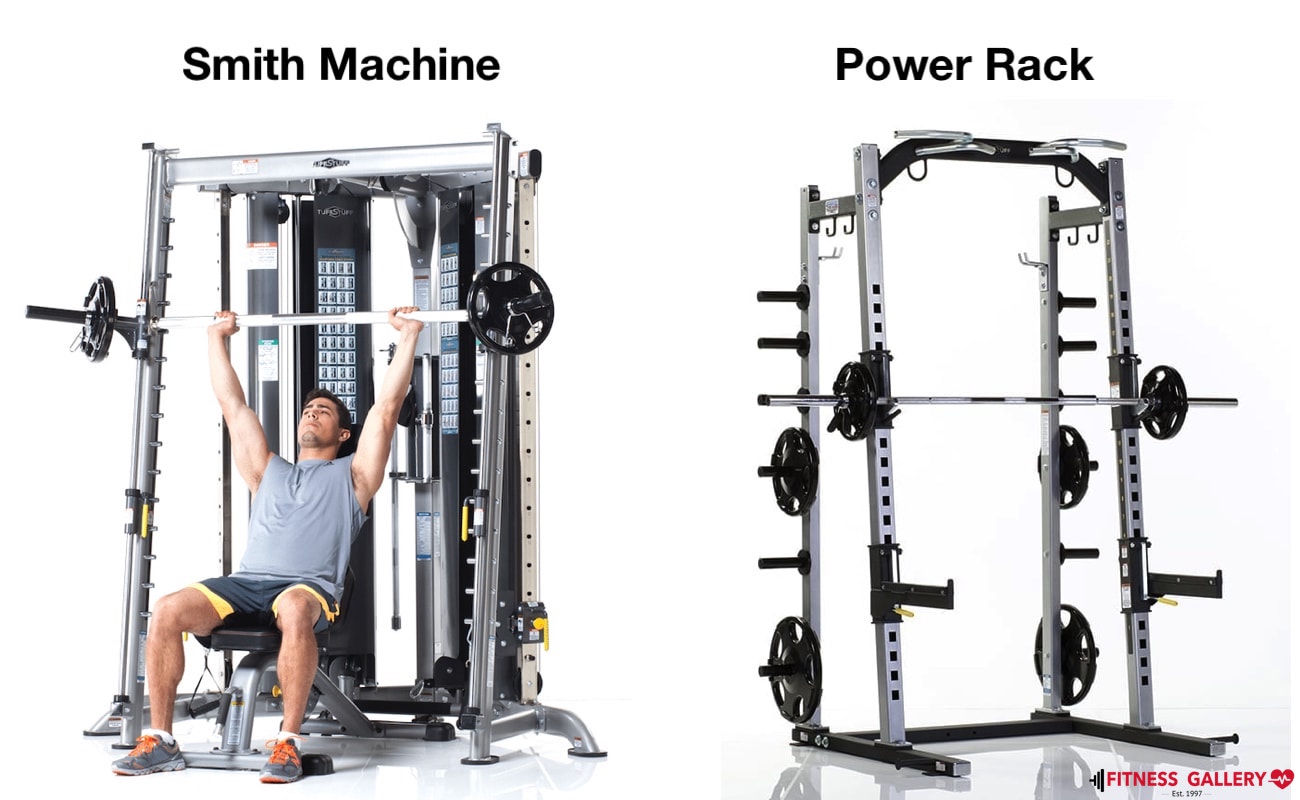
For most who go to the gym, the barbell is the holy grain of their program. The barbell can be used in the three primary lifts; deadlifts, bench, squat, or it can even be used in abstract compound movements. Similarly to the barbell is the Smith Machine. The cousin to the squat rack. The Smith Machine is a barbell that glides along a rail for isolated movements.
What are the differences between these two? Is one better than the other?
The Smith Machine is the cousin to the squat rack and barbell. The Smith Machine difference is the fact that it is an attached rail type system. The rail system only allows the barbell to travel up and down along the rails. Substantially it limits the mobility of the exercise to only go up or down. Because of the limited movement of the training, it decreases the chance of any injuries.
Pros
The Smith machine is greatly used for isolating particular muscles in the workout. For example, if someone wants to specifically target the upper part of the upper chest, the Smith Machine can do just that. Because the track only allows up and down movements, it focuses the muscles explicitly used for the lift rather than the isolation muscles.
The Smith Machine is also great for beginners to learn new movement. Because the machine only allows up and down movements, it is easier to learn how to do a particular exercise and get used to the movement. On top of that, it is also safer and less likely to lead to injury.
Cons
Where the Smith Machine leads in safety, it lacks in stabilization muscles. These muscles used in free weights help your overall strength, where the Smith Machine doesn’t. Another con of the Smith Machine is the pulley-system used. In most modern Smith Machines, there is a pulley-system that reduces the weight of the bar. The weight of the barbell on the smith machine is 15lbs, whereas the barbell is a deadweight of 45.
The barbell is a free weight that engages the stabilization muscles. The barbells makes you balance and support the weight, which leads to muscle growth. It is a 3-dimensional training environment; up, down, and sideways.
Pros
The free weight function of the barbell, as mention, sparks dynamic muscle growth. More muscles are involved, and more elements are involved in a free weight, because of the open range of movement, the
Cons
The free weight aspect is much riskier in terms of injury. Because many different factors are in play with free weights, the form is the most crucial part. With proper form, injury can be avoided.

Think of steady-state cardio as cross country. It’s continuous. Your body stays in one state the whole time, a constant state. There isn’t a much significant difference in heartbeats per minute over the period.
What are the benefits?
Steady-state cardio is excellent for those trying to shed pounds or build endurance. It is recommended to do this type of cardio if you are trying to cut down but not lose any muscle mass. This form is also great for the heart and even the respiratory system.
According to Medical News Today, they suggest to carry out cardio at 70-80% of heart rate reserve, which is calculated from resting heart subtracted from the maximum heart. This should be conducted for 30-45 minutes a day at a time, 4-5 days a week. This is, of course, for optimal muscle building.
How do you start a routine?
Steady-state cardio is the most straightforward cardio to do because most people can do it. It can range from a walk to a run over an extended period. It could even come in the form, from a bike to a treadmill, or even a stair climber, etc.
To start, I suggest starting off with a 15 minute 55% heart rate exercise until you feel comfortable. From there, bump it up to 70% for 20 minutes. Eventually, that turns to 30, and so on till you reach your goal. The point is, is to set a goal that’s attainable but encourages you to start. When that first is met, bump it and challenge yourself, until it becomes a hobby.
If steady-state cardio is cross country, consider interval training to be track. Its burst of high-intensity workouts over a given time. Your body rises in beats per minute and falls in beats per minute. It is more intense with some cool downtime in between sets.
What are the benefits?
Interval training is great for burning extra calories. In fact, intervals are more effective than slow endurance steady-state runs. The recovery period for interval workouts is where it really excels. Because of it us a higher intensity workout, the body must work harder to recover, and because of this, the body produces 450% more growth hormones.
Another benefit interval training has extra time. With the level of calories burned doing an hour and a half run, you can do in 30-45 minutes of interval training.
Lastly, interval training can help endurance and explosiveness. The uses lactic acid much more efficiently, thus pushing back the fatigue time window.
How do you start a routine?
Similarly, to steady-state cardio, it comes in many forms. If you can do it with steady-state cardio, you can do it with interval training. For beginners, I suggest walking for 2 minutes and jogging or running, whatever feels comfortable, for 1 minute. That walk period should be the recovery period, but the high-intensity period should defiantly push and be challenging. Do that 3 times to 5 times.
P.S. Here’s a fun little video that helps you decide which one is better for you. https://www.youtube.com/watch?v=rhDRwU95Pbk
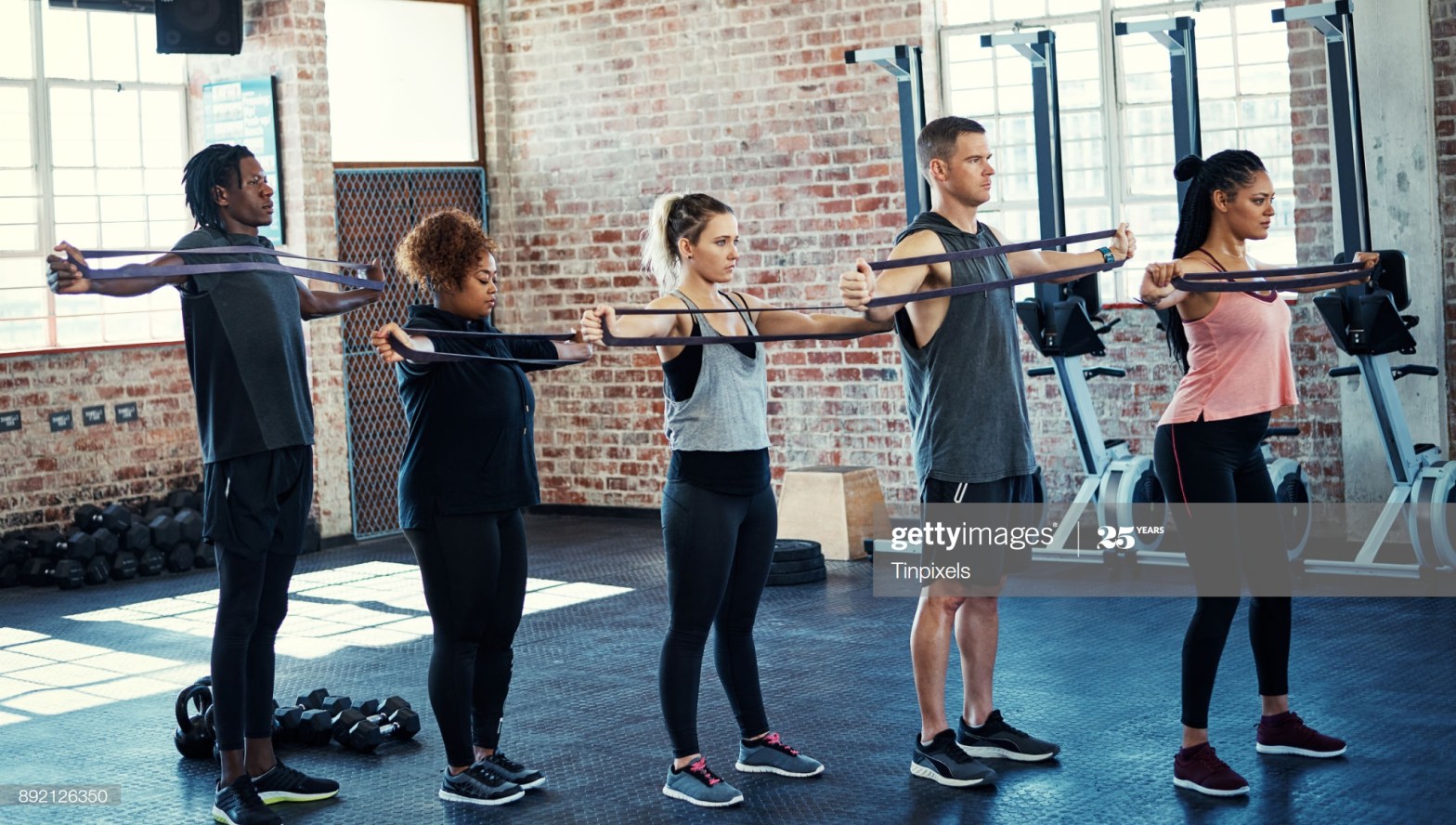
My first experience with workouts bands was in physical therapy. Let me tell you, it was horrible. The simple-looking resistance bands generated some burn in my muscles I never knew existed. Now, they are crucial to my personal quarantine workout.
It is a common misconception by new beginners think that weights are more important than bands. However, what they don’t know is that cable machines at the gym are based have the same concept as resistance bands. Cable machines force the muscles to be under constant tension due to gravity pushing the weight stack down. The resistance applies this continuous tension to the muscles when the bands are stretched, and not released until the band is in its natural state. Because of these constant tension states, bands are versatile and can be used to build muscle, mobility, and even can be used for rehabilitation.
Bands can come in a variety of sizes and resistance. For example, some bands need a constant force of 50lbs to stretch. Due to this wide array of resistance, there’s a band for everyone and for each exercise. Here are my favorite strength-building exercises to do with bands this Coronacation season.
The banded pushup. In push up form, wrap the band across the back, so there’s a side to the band in each hand. This targets the chest, upper delt, and triceps region of the body. It allows this portion to be constantly under pressure in the concentric (top motion) of the pushup.
As described in the various section, bands provide a constant force on the muscle. This can be exceptionally good for mobility and stretching. My personal favorite is the front pull apart.
I strongly encourage everyone to add this movement to the warm for every upper body workout day. The whole idea for this workout is to focus on pulling your shoulder blades together, loosening up the back and shoulders joints while stretching the chest. Do this for about 30 reps.
To start this stretch, hold the ends of the band in each one of your hands in front of your body. At the point, your arms should be straight out in front of you. From there, pull your shoulder blades together and pull with the rear delts until your arms are out to your side, and the band is going across the chest. Slowly go back to starting position and repeat.
At the bottom of the article I have provided links to two videos showing exactly how to do the exercises.
What a crazy last few weeks it’s been in the world. With everything going on, I hope everyone is practicing their social distancing and isolation. I’ve been at home bored out of my mind, like plenty of people with nowhere to go. Bars are closed, restaurants are closed, and no sports on the TV there feels like there is nothing to do. Even the gyms are closed.
At this time, it seems like there is nothing to do than watch Netflix, play video games, and drink some beer. However, now is the best time to start getting that summer body. Just because the gyms are closed doesn’t mean the gains are closed.
There are plenty of workouts that can be done at home. For example, I just ordered some bands from the internet so I can continue to work out. I’ll post a workout to do with them next week. However, before I ordered them, my day consisted of a morning run whenever I woke up. This helped me get out of the house. With beautiful weather and nothing to do, it seems like a perfect time to go for a run. It doesn’t have to be anything crazy, but it’s the effort that counts.
After the run, I usually move into a bodyweight circuit. A great idea is to try an AMRAP circuit. AMRAP stands for as many reps as possible. The way I do it is by putting a one minute counter onto the clock and go as hard as I can for that one minute. For example, you could put a one minute counter onto the clock and try to get as many pushups as you can. It challenges and motivates you to do better next week.
With this time away from the gym, you’re going to lose muscle mass, unless you have a home gym. Why not embrace it? Go on the runs, and if you’re like me, cardio was the worst part about the gym, but not now. With summer right around the corner, it’s better than ever to start running and focusing on the abs instead of just lifting heavyweights.
Abs go perfectly with an AMRAP circuit. Do multiple exercises targeted the different sections of your core. For example, side planks or twists for the oblique’s, crunches and knee touches for the upper abs, leg raises and scissors kicks for the lower abs, and wipers for the lower oblique’s. Put a minute on the clock and try to do as many as you can of each exercise. Before you know it, your abs are going to get stronger than ever.
The most important thing to remember, though, with all of this slimming, and high-tempo exercise that accounts for 30% of it. The other 70% is what you eat. Focus on what you’re putting into your body and try and keep the calories in check with your goal.
Last week’s blog I talked about the three macronutrients and the importance of them on the body. Touching basis off of that, the goal for this week’s blog is to educate that you are more than able to supply your body what it needs without a meal plan and on college budget.
One of the biggest factors college students have when it comes to eating correctly, is the time and the money. College students are lazy and don’t feel like cooking all the time. Hell, some don’t know how to cook at all. Or others just don’t have the money to go and get healthy food from the store. That’s a common stereotype of clean eating.
An easy way to make sure that you’re aren’t spending too much starts with where you shop. I commonly use Walmart because it’s cheap. If Kroger is your thing make sure to get a rewards card to save some of that extra money to use for gas. Another benefit Walmart has is they usually have a generic brand of something. For example, another way to save money is by buying a 5lb bag of frozen chicken instead of buying fresh chicken breasts that come in a pack of four. An alternative to this depending on the scenario is to buy the fresh chicken and or freeze it or meal prep it.
Similarly to the chicken, fresh produce can also be expensive. On top of that it goes bad if not cooked in a timely manner. An easy solution to this is to buy bags of frozen produce. For example I usually buy a bag of frozen broccoli and the thing will last much longer than if I just bought 2 heads of broccoli. All you have to do is throw it in the microwave for 4 minutes submerged in water and boom, fresh broccoli.
The other main issue many students have when it comes to eating clean is the time component. Let’s be realistic, no one has the time to cook every meal every day. Sometimes you don’t feel like cooking and that’s me a majority of the time. I would much prefer throwing something in the microwave for two minutes. Well, with meal prepping that’s possible.
Meal prepping became a huge trend recently due to rise in fitness popularity. Meal prepping is 70% of the body when it comes to accomplishing goals for the gym. Its much easier to do than you think.
Using the 5lb bag of frozen chicken that I got, I will usually thaw out four individual chicken breasts. For carbs I love rice, and eat rice with a good majority of my meals that I prep. I also throw in some of that frozen broccoli into the Tupperware, and boom. That’s a healthy inexpensive meal prep.
Let me know what your guy’s go to meal prep meal is?
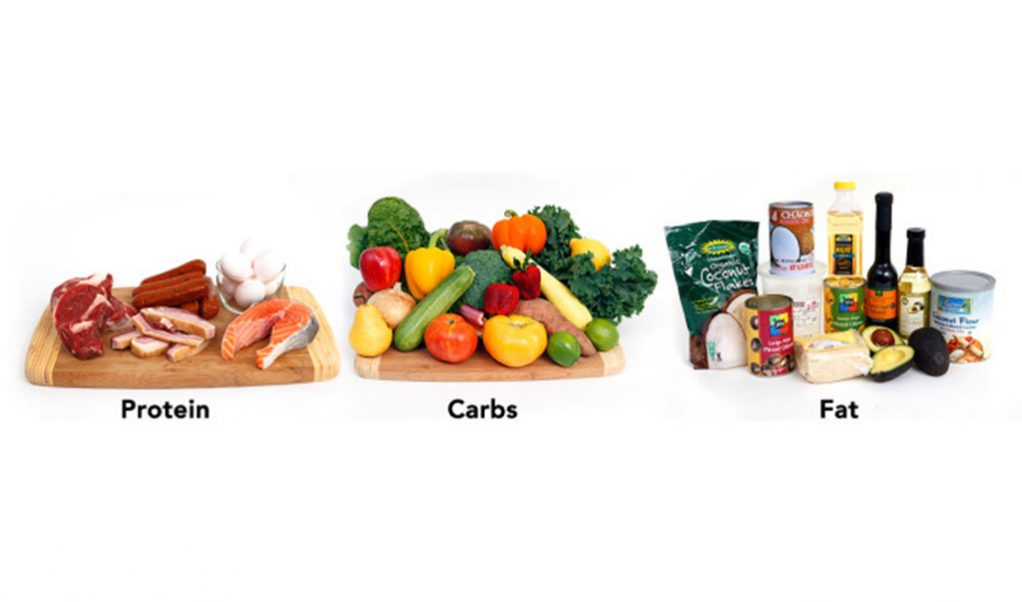
Are you trying to get bigger? Trying to get that six pack that you have always wanted? Or are you trying to train to become a better athlete? The gym is a good place to start, however the food that you eat is as important if not more important than the gym alone. Think of your body as an engine, it needs oil and gasoline to run right? The same can be said about the body. A correct calorie intake is essential to providing your body with the energy it needs to recover and perform at its best. There are three macronutrients essential for the body; proteins, carbohydrates, and fats.
Proteins are the building blocks responsible for muscle mass and growth. They are most common in animal products (meats & dairy) also plant based products, such as nuts. According to the National Institutes of Health, proteins are broken down into amino acids. The body requires a quantity of amino acids to function properly. There are three types of amino acids; essential, nonessential, and conditional. Essential amino acids must be digested by the body because the body alone cannot create essential amino acids. Nonessential amino acids are created by the body through the digestion of essential amino acids.
The other macronutrient required by the body are carbohydrates. Carbohydrates can be categorized into three different parts; sugars, starches, and fiber. These can either be complex or simple carbohydrates, as well as good carbs or bad carbs. An example of a simple bad carb would be soda. Meanwhile complex good carbs can come in the form of whole grains. It is important to note that carbohydrates are important to the body, but it depends on the type of carbohydrate. Where Ice cream is a carb, so are potatoes. If cutting back on carbs, eliminate the hurtful simple carbs, and focus on the complex carbs.
The last type of macronutrient are fats. Fats go in the same boat as carbohydrates, where is this macronutrient coming from? According to heart.org, dietary fats are essential to give your body energy and to support cell growth. Fats can be categorized into four segments; saturated, Trans, monosaturated, and polyunsaturated fats. Regardless of the type of fat, in every gram of fat there are nine calories. They are denser than proteins, and that is important to note. Health experts recommend replacing Tran’s fats and saturated fats with monosaturated fats and polyunsaturated fats. It is also important to note that fats should be avoided after working out, but will give energy before a workout.
The main takeaway from all of this is to know what you are putting into your body and where that macronutrient is coming from. All in moderation.
References:
https://www.heart.org/en/healthy-living/healthy-eating/eat-smart/fats/dietary-fats
https://www.everydayhealth.com/diet-nutrition/diet/good-carbs-bad-carbs/
Finding Motivation in College:
We’ve all been there. From lying in bed in the morning thinking “can I skip this class and be fine?”, to wondering if the gym can wait a day because you don’t have the energy to go. For me this hits about half way through the semester. Once I start getting exam after exam after project after project, I find myself with a lack of motivation and more importantly a lack of gains.
A lack of motivation is something that affects all aspects of your life. It’s essentially what drives you to do the things that you do. Once that starts slipping and times get rough your personal health is one of the first things to be put on hold.
Luckily that’s what pre works for!
Joking. Yes pre work does help me get the energy I need to go to the gym but it’s not really healthy. No one should depend on pre work out to get to the gym. It’s a tool, not a necessity. However, pre work out could become part of your routine.
If I was asked “what is the most important thing someone starting to go to the gym could do?” I would say build a routine. By building a routine it’s easier to get in the habit of doing something whatever it is. A routine helps with time management and motivation.
Time management in college is very important. Going to classes, doing homework, sleeping, going to the gym, and getting drunk on the weekends (if legal age) all require time management. The easiest way to fit all these things into a day is to build a routine. For example; wake up early in the morning, cook breakfast, go to class, go to the gym, eat again, then homework, and go out if ones able to. This is an example of my routine.
Another important aspect building a routine has, is motivation. Humans are creatures of habit. How many people do you know who switch up things up every day? Probably not a lot. Most of us are designed to be on routine. In the working world it helps people stay on track, because they go to the same job, at the same time and come home at the same time. In college there’s a little more freedom than that, and most students don’t necessarily have a routine. A reason for this is because different days have different schedules and classes have different obligations different days.
The best thing someone could do now if they’re serious about being committed to the weight room is to build a routine. Even in the roughest days when it’s hard to get up, that routine is going to help motivated you to do the things you need to do.
This is an example post, originally published as part of Blogging University. Enroll in one of our ten programs, and start your blog right.
You’re going to publish a post today. Don’t worry about how your blog looks. Don’t worry if you haven’t given it a name yet, or you’re feeling overwhelmed. Just click the “New Post” button, and tell us why you’re here.
Why do this?
The post can be short or long, a personal intro to your life or a bloggy mission statement, a manifesto for the future or a simple outline of your the types of things you hope to publish.
To help you get started, here are a few questions:
You’re not locked into any of this; one of the wonderful things about blogs is how they constantly evolve as we learn, grow, and interact with one another — but it’s good to know where and why you started, and articulating your goals may just give you a few other post ideas.
Can’t think how to get started? Just write the first thing that pops into your head. Anne Lamott, author of a book on writing we love, says that you need to give yourself permission to write a “crappy first draft”. Anne makes a great point — just start writing, and worry about editing it later.
When you’re ready to publish, give your post three to five tags that describe your blog’s focus — writing, photography, fiction, parenting, food, cars, movies, sports, whatever. These tags will help others who care about your topics find you in the Reader. Make sure one of the tags is “zerotohero,” so other new bloggers can find you, too.

 Dano's College Fitness Blog