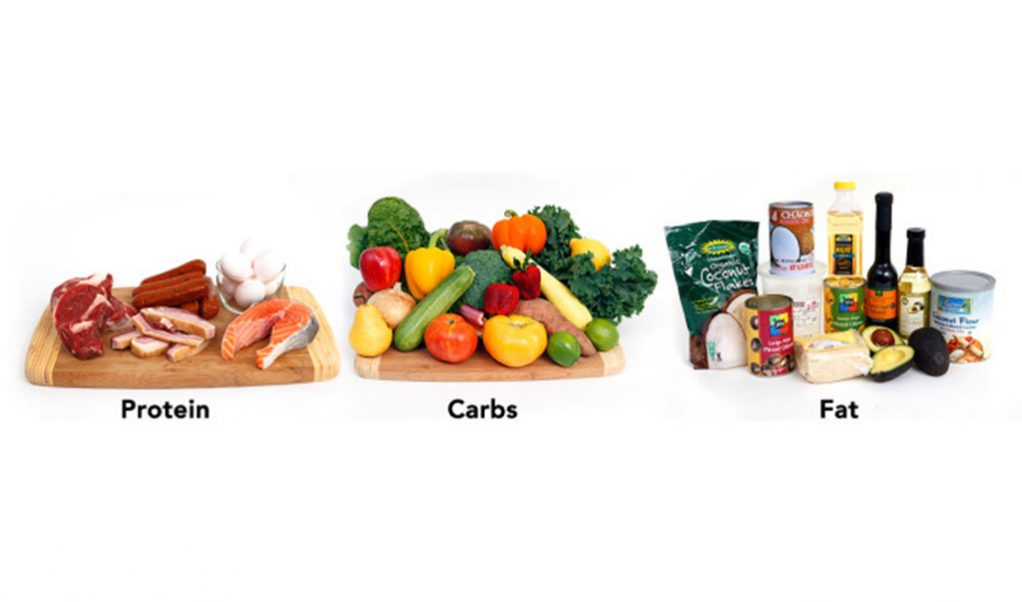
Are you trying to get bigger? Trying to get that six pack that you have always wanted? Or are you trying to train to become a better athlete? The gym is a good place to start, however the food that you eat is as important if not more important than the gym alone. Think of your body as an engine, it needs oil and gasoline to run right? The same can be said about the body. A correct calorie intake is essential to providing your body with the energy it needs to recover and perform at its best. There are three macronutrients essential for the body; proteins, carbohydrates, and fats.
Proteins are the building blocks responsible for muscle mass and growth. They are most common in animal products (meats & dairy) also plant based products, such as nuts. According to the National Institutes of Health, proteins are broken down into amino acids. The body requires a quantity of amino acids to function properly. There are three types of amino acids; essential, nonessential, and conditional. Essential amino acids must be digested by the body because the body alone cannot create essential amino acids. Nonessential amino acids are created by the body through the digestion of essential amino acids.
The other macronutrient required by the body are carbohydrates. Carbohydrates can be categorized into three different parts; sugars, starches, and fiber. These can either be complex or simple carbohydrates, as well as good carbs or bad carbs. An example of a simple bad carb would be soda. Meanwhile complex good carbs can come in the form of whole grains. It is important to note that carbohydrates are important to the body, but it depends on the type of carbohydrate. Where Ice cream is a carb, so are potatoes. If cutting back on carbs, eliminate the hurtful simple carbs, and focus on the complex carbs.
The last type of macronutrient are fats. Fats go in the same boat as carbohydrates, where is this macronutrient coming from? According to heart.org, dietary fats are essential to give your body energy and to support cell growth. Fats can be categorized into four segments; saturated, Trans, monosaturated, and polyunsaturated fats. Regardless of the type of fat, in every gram of fat there are nine calories. They are denser than proteins, and that is important to note. Health experts recommend replacing Tran’s fats and saturated fats with monosaturated fats and polyunsaturated fats. It is also important to note that fats should be avoided after working out, but will give energy before a workout.
The main takeaway from all of this is to know what you are putting into your body and where that macronutrient is coming from. All in moderation.
References:
https://www.heart.org/en/healthy-living/healthy-eating/eat-smart/fats/dietary-fats
https://www.everydayhealth.com/diet-nutrition/diet/good-carbs-bad-carbs/
 Dano's College Fitness Blog